Time to Logout and Regain Brain Cells

E-waste
Ever since the first personal computers (Altair) were released back in the 1974. The accumulation of e-waste has gradually increased until the early 2000's. From then on it has exponentially increased yearly. According to the UN in 2019 the total amount of e-waste produced weighed the same as approximately 350 mega cruise ships combined with only a small percentage (9.8%) being properly recycled in the United States. What's even more stunning is the $58 Billion worth of raw materials left in the e-waste. As the gold, silver, copper and other raw materials within e-waste are discarded in piles weighing millions of metric tons. Countries without the proper means to recycle them have to find other means to deal with the repercussions. As the process to recycling e-waste is hazardous in itself. The unrecycled e-waste contains heavy metals that can leach into the soil and water contaminating both. Such heavy metals are lead, mercury, cadmium, nickel and components of flame retardants. With the metals leaching into and contaminating the earth it effects the food and water supply humans consume causing health issues along with environmental destruction and loss of wildlife. Another thing to ponder on is, how do companies acquire all the raw materials for the electronic devices? Answer is mining. People are thrusted into mines to harvest the precious metals having to deal with extreme conditions and temperatures.
Photo provided by https://unsplash.com/@_twistedplot

Before mining
The average cell phone today has 0.5oz of copper in it. It's the one precious metal that exceeds all other metals in the phone and is roughly 12% of the total phone weight. Since it's the metal used most the need to mine it takes precedence and with that comes copper mines being constructed across the globe.
Copper mine
Photo provided by: Matthew Evanoff
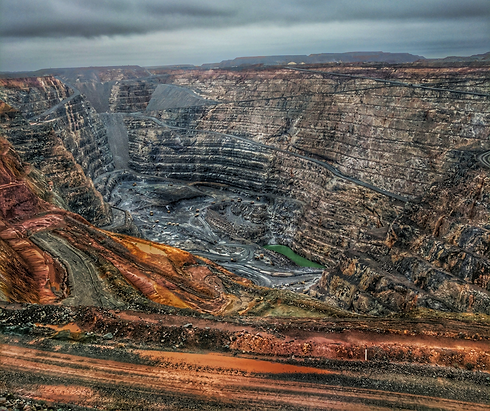
Photo provided by https://unsplash.com/@matthewdelivera

This shows part of the 0.5oz of copper within a circuit board in any electronic device.
Photo provided by Vishnu Mohanan (@vishnumaiea) | Unsplash

Photo provided by World Health Organization (WHO)

Photo provided by E-waste management in Ghana: from grave to cradle (europa.eu)

Photo provided by Stringer/ REUTERS
Here is a comparison of recycling in Ghana on the left and China above